
For many aspiring chefs, the dream of working in a high-end restaurant or running their own culinary business begins with more than just a love for food.
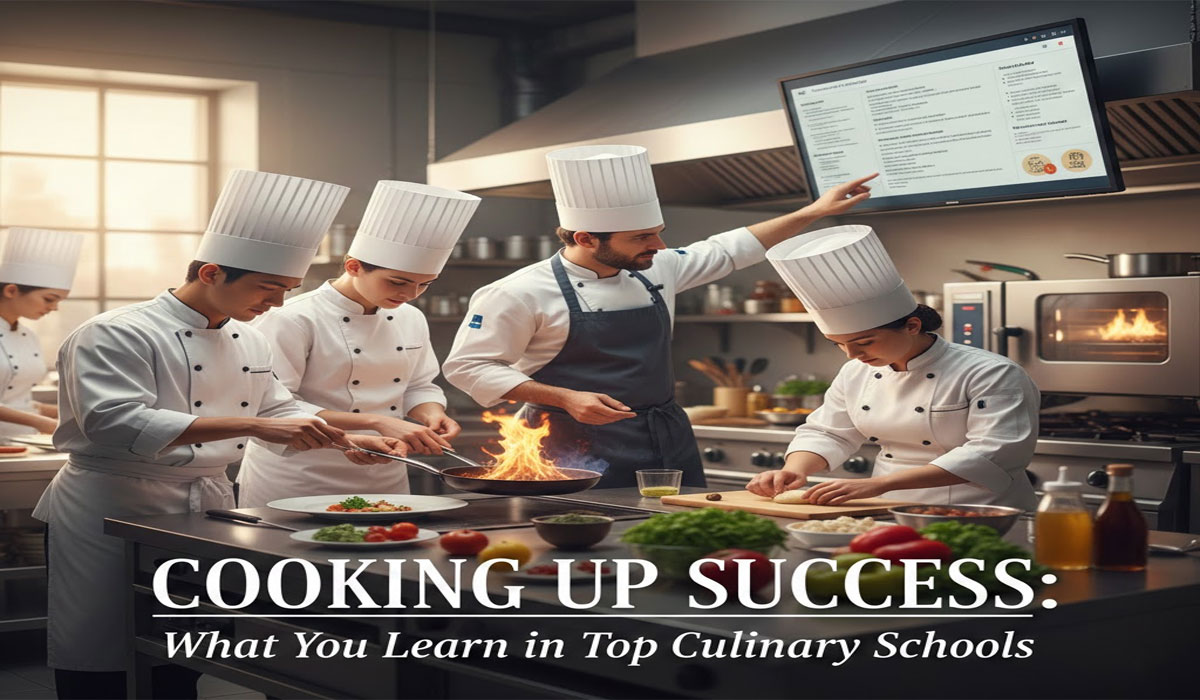
This Health, Business & Culinary Hub article will explore what students learn in top culinary schools, from mastering kitchen techniques to developing leadership skills, creativity, and an understanding of food business management.
Mastering Core Culinary Techniques
At the heart of every culinary program is learning the essential techniques. Students are trained in knife skills, cooking methods such as sautéing, roasting, and baking, and the precise use of ingredients to create balanced flavors.
In addition to basic cooking, students learn advanced techniques like molecular gastronomy, sous-vide cooking, and plating artistry.
Understanding Ingredients and Global Cuisines
Culinary schools emphasize the importance of understanding ingredients their origins, flavors, and how they interact.
Moreover, top schools expose students to global cuisines, from French and Italian classics to Asian, Middle Eastern, and Latin American flavors. This exposure expands creativity and equips chefs to cater to diverse clientele or start international culinary ventures.
Read Also: The Importance of Mental Health Services in a Busy Life
Developing Creativity and Plating Skills

Culinary schools nurture creativity alongside technical skill. Students experiment with flavor combinations, textures, and presentation, learning how to turn a simple dish into a visually appealing work of art.
Plating skills are especially emphasized, as presentation significantly impacts diners’ perception. By practicing aesthetic arrangement, color contrast, and portion control, students develop a refined sense of taste and visual appeal, crucial for career advancement in restaurants, hotels, or media-based culinary ventures.
Leadership and Kitchen Management
Top culinary schools also teach leadership and kitchen management skills. Running a professional kitchen requires teamwork, time management, and the ability to handle high-pressure environments.
Students learn how to supervise staff, delegate tasks, maintain hygiene standards, and manage inventory. These managerial skills prepare them to take on roles like executive chef or kitchen manager, where leadership is as important as cooking ability.
Business Skills and Entrepreneurship
Many culinary programs include lessons in business and entrepreneurship. Students explore menu planning, cost analysis, marketing, and financial management, helping them understand the economics behind running a successful food business.
This combination of culinary and business education is what sets top chefs apart in a competitive market.
Networking and Industry Exposure
Attending a top culinary school also provides invaluable networking opportunities. Students interact with industry professionals, guest chefs, and alumni who can offer guidance, mentorship, and potential job placements.
Internships and externships at renowned restaurants or hotels allow students to apply classroom knowledge in real-world settings. These experiences not only build skills but also open doors to career opportunities that might otherwise take years to access.
Conclusion
Culinary schools equip students with a unique blend of technical skill, creativity, leadership, and business knowledge. From mastering cooking techniques to managing a kitchen and launching a food business, graduates gain the tools needed to thrive in a demanding but rewarding industry.
Thank you for taking the time to learn more about How Social Media Can Increase in Business & Culinary Hub, we will provide you with more information soon.
Image Source:
- First Image from caresade.info
- Second Image from www.cordonbleu.edu

